

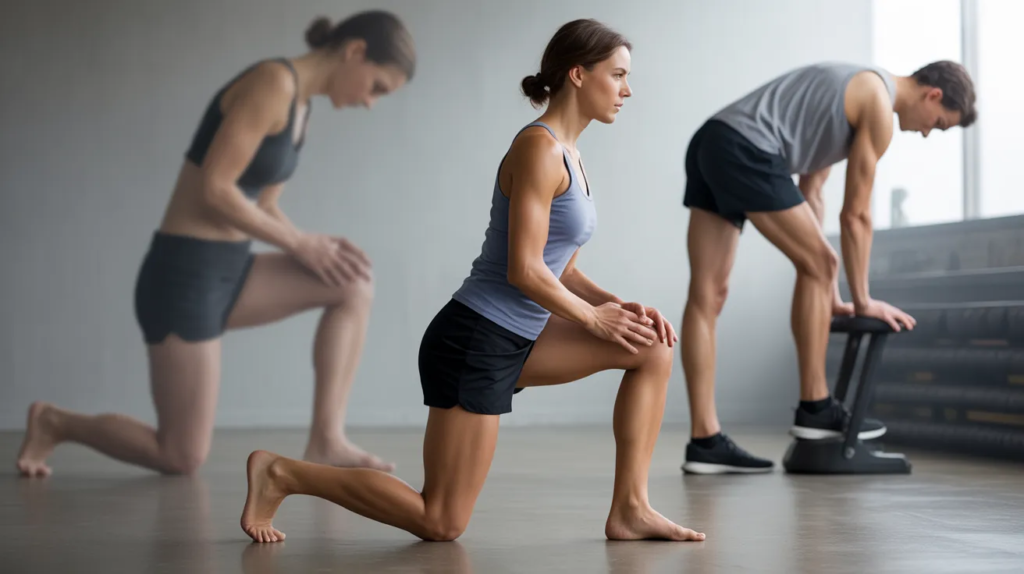
Hip flexors are a group of muscles located at the front of your hips that play an essential role in walking, running, sitting, and overall lower-body movement. When these muscles become tight due to long sitting hours, poor posture, or lack of movement, they can lead to discomfort, stiffness, and even lower back pain.
Learning the right way to do a hip flexor stretch is important for improving flexibility, reducing tension, and supporting better posture. This guide explains everything in a simple and practical way so you can safely include it in your daily routine.
Understanding the Hip Flexors
The hip flexors include muscles such as the iliopsoas, rectus femoris, and sartorius. These muscles connect the lower spine and pelvis to the thigh bone, helping you lift your knees and bend your hips.
When these muscles become tight, they can pull the pelvis forward, creating imbalance in posture and movement. This is especially common in people who sit for long periods or have limited physical activity.
Why Hip Flexor Stretching Is Important
Regular hip flexor stretching improves flexibility, reduces stiffness, and supports healthy movement patterns. It also helps reduce strain on the lower back by restoring natural alignment in the pelvis.
Key benefits include:
- Reduced lower back tension
- Improved hip mobility
- Better posture
- Enhanced athletic performance
- Lower risk of injury
Even a few minutes of stretching daily can bring noticeable improvements in mobility and comfort.
The Right Way to Do a Basic Hip Flexor Stretch
The kneeling hip flexor stretch is one of the safest and most effective ways to target these muscles when done correctly.
Step-by-step method:
- Start in a half-kneeling position
- Place one knee on the ground and the other foot in front
- Keep your upper body straight and tall
- Gently push your hips forward
- Feel the stretch in the front of the hip
The movement should be slow and controlled. Avoid forcing the stretch, as this can reduce effectiveness and increase discomfort.
Proper Body Alignment During the Stretch
Correct posture is the most important part of performing a hip flexor stretch safely.
To maintain proper alignment:
- Keep your chest lifted
- Engage your core lightly
- Avoid arching your lower back
- Keep hips facing forward
When alignment is correct, you will feel a deep but comfortable stretch in the hip area without pressure on the lower back.
Common Mistakes to Avoid
Many beginners perform this stretch incorrectly, which reduces its benefits.
Avoid these mistakes:
- Leaning too far forward
- Overarching the lower back
- Bouncing during the stretch
- Holding your breath
- Not engaging the core muscles
Stretching should always feel stable and controlled rather than forced or rushed.
How Long Should You Hold the Stretch?
For beginners, holding the stretch for 20 to 30 seconds is ideal. Repeat it 2 to 3 times on each side for balanced flexibility.
As your flexibility improves, you can gradually increase the hold time to 45–60 seconds. Consistency matters more than intensity.
Variations of Hip Flexor Stretch
Once you master the basic version, you can try different variations to deepen the stretch and improve mobility.
Standing Hip Flexor Stretch
- Step one foot forward into a lunge position
- Keep the back leg straight
- Push hips forward gently
Couch Stretch
- Place one knee near a wall or couch
- Keep the back leg bent upward
- Stay upright and gently shift hips forward
Lunge with Side Reach
- Get into a lunge position
- Raise one arm overhead
- Lean slightly backward for a deeper stretch
Each variation targets the hip flexors slightly differently, improving overall flexibility.
When to Do Hip Flexor Stretches
Timing can improve results significantly.
Best times include:
- After workouts
- After long sitting periods
- In the morning for mobility
- During warm-ups with light movement
Avoid deep stretching when your muscles are completely cold.
Breathing Technique During Stretching
Breathing plays an important role in relaxation and muscle release.
Follow this simple method:
- Inhale before starting the stretch
- Exhale slowly as you deepen the position
- Maintain steady breathing while holding
Proper breathing helps the muscles relax, allowing a deeper and safer stretch.
How Hip Flexor Flexibility Supports Full-Body Fitness
Flexible hip flexors improve movement efficiency in many exercises like squats, lunges, and running. They also reduce stress on the lower back and improve posture.
A tight hip area can limit performance in both lower-body and upper-body movements. For example, even training programs like tricep workouts rely on overall body stability and posture, which is indirectly influenced by hip flexibility. When your hips move well, your entire body performs better during strength training.
Daily Routine for Better Results
A simple daily routine can significantly improve flexibility:
- Warm up with light walking or movement
- Perform kneeling hip flexor stretch on both sides
- Hold each side for 20–30 seconds
- Repeat 2–3 rounds
- Finish with slow breathing for relaxation
This routine requires no equipment and can be done anywhere.
Final Thoughts on Proper Hip Flexor Stretching
The right way to do a hip flexor stretch is not about intensity but about control, alignment, and consistency. When performed correctly, it helps improve posture, reduce stiffness, and support better movement in everyday life and physical activity.