
In the world of fine dining, certain dishes stand out not just for their taste but for their history and prestige. Chateaubriand is one such dish. Known for its exceptional tenderness and refined presentation, it represents the peak of culinary simplicity done right. At the same time, its name connects it to a remarkable historical figure, François-René de Chateaubriand, adding depth and cultural value to the dish. This combination of flavor and history makes Chateaubriand more than just a meal—it is an experience.
What Is Chateaubriand?
Chateaubriand is a premium steak cut taken from the center portion of the beef tenderloin. This specific part of the animal is known for being extremely tender because it is a muscle that is rarely used. As a result, the meat is soft, lean, and smooth in texture.
Unlike other steaks that may focus on marbling for flavor, Chateaubriand relies on its natural tenderness and careful preparation. The cut is typically thick and large enough to serve two people, making it a shared dish often featured in high-end restaurants.
How Chateaubriand Is Prepared
The preparation of Chateaubriand is centered on precision and technique. Since the meat itself is of high quality, the cooking process is designed to enhance rather than overpower its natural flavor.
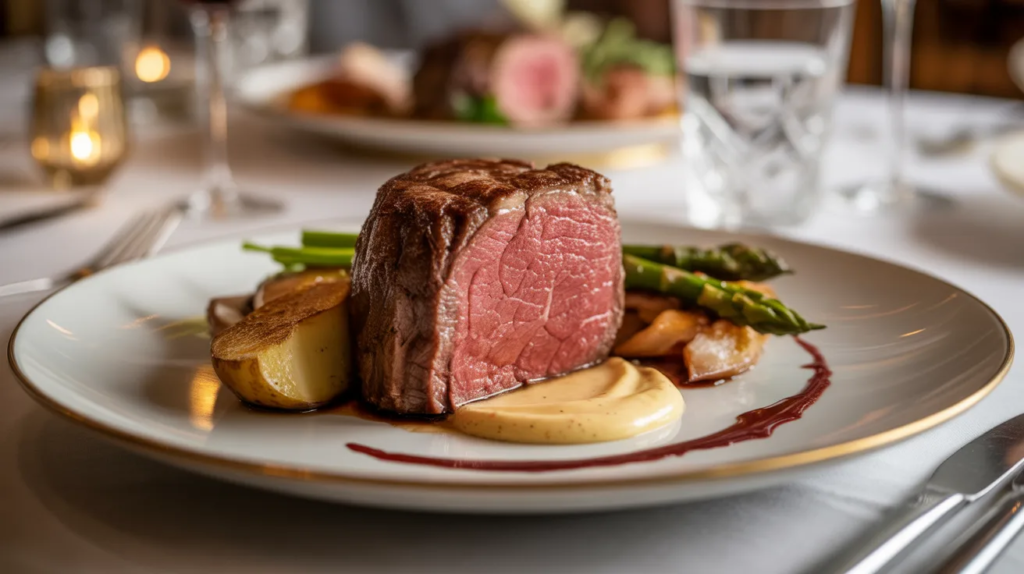
The steak is usually seasoned with simple ingredients such as salt and pepper. It is first seared in a hot pan to create a golden crust, which locks in juices and adds texture. After searing, it is transferred to an oven to finish cooking evenly.
Achieving the correct doneness is critical. Medium-rare is often preferred, as it preserves the tenderness and prevents the meat from becoming dry. Once cooked, the steak is allowed to rest for several minutes before slicing. This step ensures that the juices redistribute throughout the meat, resulting in a more flavorful bite.
Traditional Sauces and Side Dishes
Chateaubriand is rarely served alone. It is typically paired with classic French sauces that complement its delicate flavor. One of the most popular options is béarnaise sauce, which is made from butter, egg yolks, vinegar, and herbs. This sauce adds richness without overwhelming the steak.
Other common accompaniments include red wine reduction or demi-glace, both of which provide a deeper and more robust flavor profile. On the side, dishes such as roasted potatoes, grilled vegetables, or asparagus are often served to complete the plate.
The overall presentation is elegant and balanced, reflecting the dish’s reputation as a fine-dining staple.
The Origin of the Name
The name Chateaubriand comes from François-René de Chateaubriand, a well-known French writer and statesman from the late 18th and early 19th centuries. While the exact origin story of the dish is not fully confirmed, it is widely believed that his personal chef created the recipe in his honor.
One popular story suggests that the chef used a special cooking method in which the tenderloin was placed between two less desirable pieces of meat. These outer pieces absorbed the heat, protecting the center cut and allowing it to cook perfectly. Although the accuracy of this story is debated, it highlights the care and creativity associated with the dish.
Who Was François-René de Chateaubriand?
Beyond the culinary connection, François-René de Chateaubriand was a significant figure in French history. He was a writer, diplomat, and politician who played an important role in shaping the Romantic movement in literature.
His works focused on emotion, nature, and individual expression, influencing many writers who came after him. In addition to his literary achievements, he served in various political roles, representing France on the international stage. His legacy is one of intellectual depth and cultural impact, which aligns well with the sophistication of the dish that bears his name.
Why Chateaubriand Remains Popular Today
Even in modern times, Chateaubriand continues to hold its place as a symbol of elegance and quality. It is frequently featured in upscale steakhouses and fine dining establishments, where it is presented as a premium option for guests seeking something special.
Part of its lasting appeal lies in its simplicity. With minimal seasoning and careful cooking, the dish allows the natural qualities of the meat to shine. This focus on quality over complexity is what makes it timeless.
Additionally, the tradition of serving it as a shared dish adds to its appeal, making it a popular choice for special occasions and memorable dining experiences.