

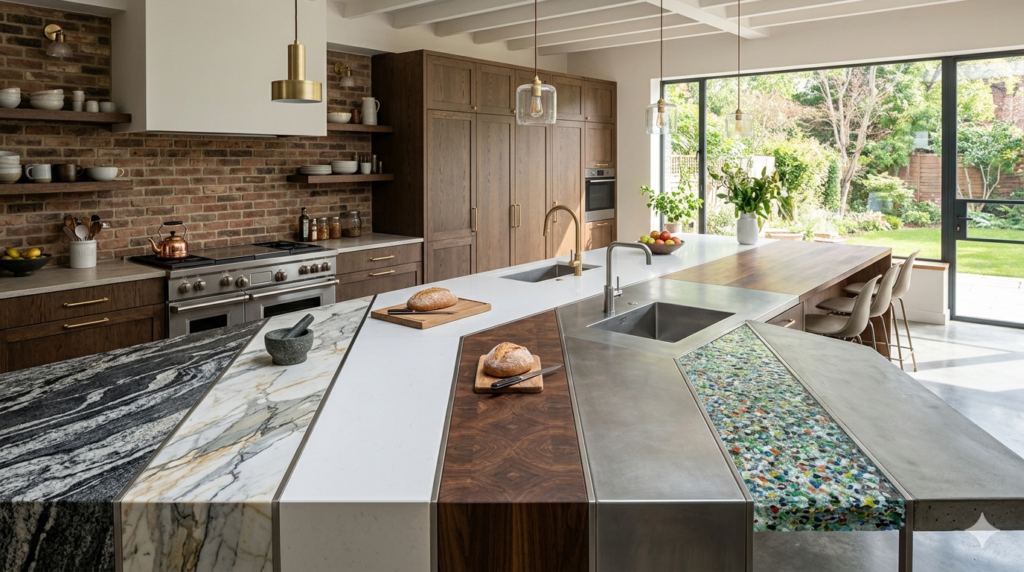
Key Takeaways
- Natural stones like granite and quartzite provide durability and classic beauty.
- Engineered materials such as quartz offer low maintenance and versatility.
- Wood and stainless steel add warmth and a unique touch but require specific care.
- Emerging materials like recycled glass and concrete cater to eco-conscious homeowners.
Table of Contents
- Granite: The Classic Choice
- Quartzite: Natural Elegance
- Quartz: Engineered Versatility
- Wood: Warmth and Character
- Stainless Steel: Industrial Chic
- Emerging Materials: Recycled Glass and Concrete
- Final Thoughts
Selecting the appropriate countertop material is essential for crafting a kitchen that remains both stylish and functional over time. With numerous options available, it’s important to choose materials that offer durability, aesthetic appeal, and timelessness. For homeowners searching for quality granite Pittsburgh, finding a reliable provider is key to achieving long-lasting results. Top It Off, Inc. provides an extensive selection of granite and marble slabs. Founded in 1998 by Richard and Joyce Beahm, this Evans City-based company is renowned for its exceptional soapstone offerings and commitment to quality, making it a trusted choice for homeowners in western Pennsylvania.
Granite: The Classic Choice
Granite has long been a favorite among homeowners seeking a durable, attractive countertop material. Its natural patterns and color variations make each slab unique, adding a personalized touch to any kitchen. Additionally, granite is heat-resistant and, when properly sealed, stain- and scratch-resistant.
One of the significant advantages of granite is its practicality in busy family kitchens. Chefs can place hot pots directly on their surface without fear of damaging the surface, though trivets are recommended to maintain a polished finish. Granite’s solid feel and hardness also make it an excellent surface for baking and other food preparations. Maintenance includes resealing the stone periodically, which helps protect its surface and prolongs its lifespan. With proper care, granite countertops can last for decades, retaining their natural beauty and value in the home. In terms of style, granite ranges from muted earth tones to vibrant blues and greens, offering design flexibility that complements both traditional and modern kitchens. For homeowners considering resale value, granite is often considered a desirable upgrade by potential buyers, making it a sound investment.
Quartzite: Natural Elegance
Quartzite is a natural stone that offers the beauty of marble with the durability of granite. It’s highly resistant to heat and scratches, making it an excellent choice for busy kitchens. However, it requires periodic sealing to maintain its stain resistance.
Quartzite stands out for its luxurious appearance, which often features soft veining and a shimmering, crystalline surface. It is formed by the metamorphosis of sandstone under intense heat and pressure, resulting in a dense, durable material. Homeowners prize quartzite for its ability to mimic the elevated look of marble while benefiting from improved strength and scratch resistance. Unlike some stones, quartzite is less likely to etch or develop dull spots due to acidic spills. However, since quartzite is porous, routine sealing is recommended to prevent staining from wine, oils, or juices. Installation should be performed by professionals to ensure the stone remains intact. As a countertop, quartzite pairs beautifully with both natural wood cabinetry and sleek, contemporary hardware, enhancing a kitchen’s aesthetic breadth. Its timeless elegance makes it ideal for creating a show-stopping kitchen island or a stunning backsplash.
Quartz: Engineered Versatility
Quartz countertops are engineered from natural quartz crystals combined with resins and pigments. This process creates a non-porous surface that resists staining and doesn’t require sealing. Quartz is available in a wide range of colors and patterns, allowing homeowners to achieve various aesthetic goals.
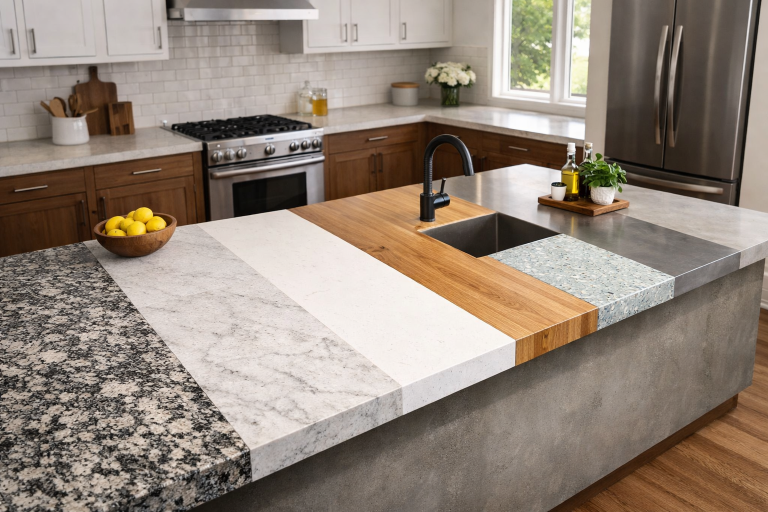
Modern quartz surfaces closely replicate the look of natural stone, allowing you to achieve luxe styles without the upkeep of marble or granite. The uniformity in color and pattern is one of quartz’s key advantages for homeowners who prefer a consistent look throughout their kitchen. Additionally, quartz’s non-porous nature makes it highly hygienic, as it does not harbor bacteria or viruses, making it especially suitable for families. The toughness of quartz is well-suited to handling everyday kitchen demands from chopping vegetables to rolling out dough, but it’s still advisable to use cutting boards to avoid dulling knives. Brands often back their quartz countertops with extended warranties due to their proven durability. Homeowners can select from a broad palette of finishes, including polished, matte, or leathered, to match their decor preferences. Some manufacturers’ integration of recycled materials also offers eco-friendly options. While quartz generally withstands impacts, care should be taken to avoid excessive heat, as rapid temperature changes may damage resin binders.
Wood: Warmth and Character
Wood countertops, such as butcher block, add warmth and a rustic charm to kitchens. They are ideal for food preparation areas and can be sanded and refinished to address any damage. However, wood is susceptible to water damage and requires regular sealing to prevent stains and bacterial growth.
Choosing a wood countertop instantly creates an inviting, homey atmosphere in the kitchen, encouraging gathering and conversation. Available in maple, walnut, cherry, and oak, butcher block varieties can be customized with edge profiles, finishes, and thickness. Over time, wood develops a rich patina and character, making each counter truly one-of-a-kind. Maintenance includes regular oiling and prompt cleaning of spills, especially around sinks and stovetops. Many sustainable wood options, such as bamboo or reclaimed timber, are available for environmentally minded consumers. While wood may show cuts and marks from daily use, these imperfections are often welcomed as signs of a well-loved kitchen, and minor flaws can usually be buffed out or sanded smooth. In modern kitchens, wood countertops are often paired with stone for visual interest and practicality, for example, a butcher block island surrounded by granite perimeter cabinets.
Stainless Steel: Industrial Chic
Stainless steel countertops offer a sleek, industrial look and are highly durable. They are resistant to heat and stains and are easy to clean, making them a favorite in professional kitchens. Over time, stainless steel develops a patina that many homeowners find appealing.
Embracing a stainless steel countertop can transform the kitchen into a chef-inspired workspace. Its reflective surface naturally brightens the room and suits both monochromatic and color-rich designs. Stainless steel is immune to rust and is non-porous, prohibiting the growth of bacteria or mold. This makes it a smart option for those who prioritize hygiene or love cooking with a variety of ingredients. However, stainless steel shows fingerprints and scratches, and many see these as contributing to a lived-in, authentic look. Cleaning requires only mild soap and water, and occasional polishing will maintain its sheen. Creative homeowners sometimes integrate stainless steel with other surfaces, such as wood or tile, to soften the industrial edges and add mixed materials flair. It’s a strong contender for those who want a modern, lasting, and distinctly urban vibe in the heart of their home.
Emerging Materials: Recycled Glass and Concrete
For those seeking eco-friendly options, recycled glass and concrete countertops are gaining popularity. Recycled glass countertops are made from crushed glass embedded in resin or cement, offering unique colors and patterns. Concrete countertops can be customized with pigments and textures, providing a modern, industrial aesthetic. Both materials are durable but may require sealing to prevent stains.
The customization possibilities of these materials are virtually endless; recycled glass, for instance, gives counters a mosaic appearance with shimmering fragments, perfect for making a statement in contemporary or coastal designs. Concrete, on the other hand, can be cast in virtually any shape, size, or finish stamped, stained, or even embedded with decorative elements like shells or stones. Modern sealing techniques have greatly improved concrete’s resistance to water and staining, but regular maintenance is still essential to keep the surface looking pristine. Both recycled glass and concrete align with sustainable building practices, often incorporating regionally sourced or repurposed materials. Because both materials are crafted to order, homeowners can work closely with fabricators to create one-of-a-kind pieces that fit their space perfectly. While these options may not have the centuries-old reputation of stone, they meet the needs of forward-thinking homeowners seeking something truly original and environmentally responsible.
Final Thoughts
Selecting the right countertop material involves balancing aesthetics, durability, maintenance, and budget. Natural stones like granite and quartzite offer timeless beauty and resilience, while engineered materials like quartz provide versatility and low maintenance. Wood and stainless steel bring unique character but require specific care. Emerging materials like recycled glass and concrete cater to eco-conscious homeowners seeking distinctive designs. By considering these options, you can choose a countertop that will serve as a lasting centerpiece in your kitchen.
It’s recommended to visit local showrooms or stone yards, such as those offered by Top It Off, Inc., to see full slabs and samples in person. Lighting in your home may render colors and textures differently from how they appear in photos or under display lights, so viewing your candidates in a real-world setting can greatly assist decision-making. Consulting with experienced installers about fabrication, care, and warranties is also key, as some stones require specialized treatment and workmanship. Don’t forget to factor in the cost of professional installation, which can affect your overall budget, especially for heavy natural stones or custom-fabricated surfaces. Ultimately, the right countertop is a significant investment not only in the usability of your kitchen but also in your home’s overall style and future value. Whether you opt for a timeless granite, a sophisticated quartzite, a bold concrete, or an innovative recycled glass, your new surface should reflect your practical needs and personal aesthetics for years to come.