

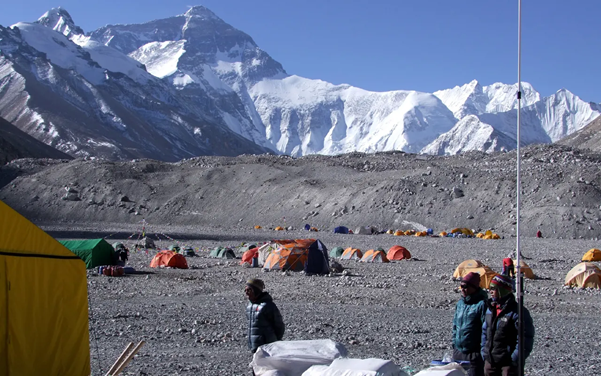
The Everest Base Camp Trek with Heli Return is one of the most exciting ways to experience the Himalayas. It involves the thrill of hiking through the renowned Everest area, coupled with the ease of returning by air in a helicopter on completion of the journey. This is a good option due to the fact that it saves time and eliminates the physical burden of walking back up the same path on foot.
In spite of the helicopter back, the question remains with many people about the difficulty of the Everest Base Camp Trek with Heli Return. This depends on a number of factors such as altitude, distance covered on the trek, physical fitness and weather, among others. These insights can guide trekkers to be ready and have an enjoyable journey without any trouble.
Understanding the Everest Base Camp Trek with Heli Return
Luxury Everest Base Camp Trek with Heli Return is a trek along the standard trekking trail over the Khumbu Valley in Nepal. You take a scenic flight to Lukla from Kathmandu, the entry point to the Everest region, which is located at an altitude of approximately 2,860 meters (9,383 feet).
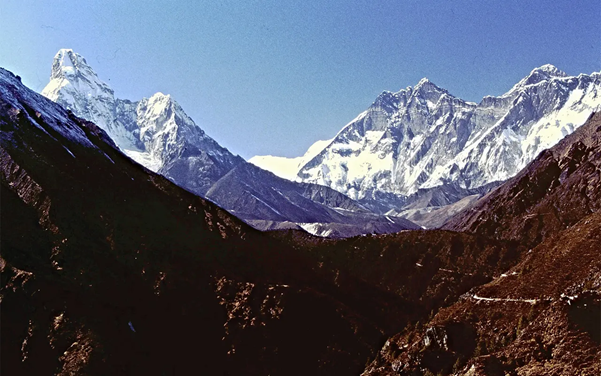
The path then continues through the popular Sherpa villages of Phakding and Namche Bazaar, starting at Lukla. The Namche Bazaar is a significant acclimatization point and it is situated at 3,440 meters (11,286 feet). At this stage, trekkers move up further through Tengboche, Dingboche and Lobuche.
Its primary destination is the Everest Base Camp, which is 5,364 meters (17,598 feet) high. It is also near the route taken by many trekkers climbing Kala Patthar (5,545 m / 18,192 ft), one of the best viewpoints for Mount Everest.
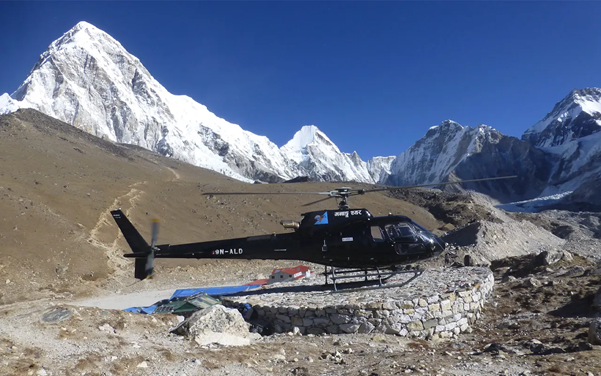
The Everest Base Camp Trek with Heli Return gives a trekker the option to fly back in a helicopter after going to places like Gorakshep or Pheriche instead of walking the entire way back to Lukla. This saves a few days of descending walks and provides an amazing aerial view of the Himalayas.
The Role of Altitude in Trek Difficulty
The greatest difficulty in the Everest Base Camp Trek with Heli Return is the altitude. The higher the trekkers go in the mountain, the lighter the air is and the lower the oxygen levels. This may result in altitude sickness when the body is not given sufficient time to adapt.
In most cases, it is the Namche Bazaar situated at 3,440 meters (11,286 feet) that trekkers will begin to feel the impacts of elevation. The symptoms may be headaches, fatigue, dizziness, or insomnia.
Further up the trail, there is Dingboche at 4,410 meters (14,469 feet) and Lobuche at 4,940 meters (16,207 feet). In such heights, appropriate acclimatization is of high importance.
Once trekkers arrive at the base camp of Everest (5364 meters (17598 feet), the air is comparatively half as rich in oxygen as that could be found at sea level. Even such simple tasks as walking uphill feel exhausting.
Due to this fact, the trek would consist of some rest days so that the body could acclimatize to the high altitude.
Trekking Distance and Daily Walking Hours
The distance covered by the trekkers on a daily basis is another reason that influences the level of difficulty of the Everest Base Camp Trek with Heli Return. The trail is not very technical, but it takes a number of hours to walk each day.
The average days of trekking require 5 to 7 hours of walking. The landscape consists of rocky trails, suspension bridges, forest trails, and slow ascents through mountain valleys.
There are uphill and downhill pathways along the route. There are also days of long climbs, particularly when one is going up from Namche Bazaar to Tengboche or even when one is going up to Lobuche or Gorakshep.
Nevertheless, the Everest Base Camp Trek with Heli Return is a less tough activity than the classic one since the trekkers do not have to walk a long distance back to Lukla. The helicopter flight will save several days of walking, which will lead to a general reduction of fatigue.
Physical Fitness Requirements
The Everest Base Camp Trek with Heli Return requires very high physical fitness and strong endurance. As a matter of fact, the trek is not that difficult, so it is possible for the majority of people with an average level of fitness.
Trekkers will not require technical climbing abilities. It is not a mountain-climbing adventure but a trekking path. Nevertheless, stamina has to be good since the trekkers take several hours per day and are in altitude.
The trek can be made easier by preparation prior to the trek. Such activities as hiking, jogging, biking, or climbing stairs are used to develop stamina. Strong heart fitness and leg strength also help trekkers handle the physical demands of the trail more comfortably.
Through adequate preparation and gradual progress, numerous first-time trekkers can complete the Everest Base Camp Trek with Heli Return.
Weather and Trail Conditions
The weather service teams monitor and report the weather and trail conditions throughout the day.
The difficulty of trekking in the Everest region is largely due to the weather. The weather in the mountains may alter rapidly, particularly when the altitude is higher.
The weather is mostly stable, and the skies are clear during the peak trekking seasons, which are spring and autumn. The daytime temperatures are pleasant, but at night they can be considerably lower.
Higher altitudes like Lobuche at 4,940 meters (16,207 feet) or Gorakshep at 5,164 meters (16,942 feet) may drop down to below the freezing point, especially in early mornings or at night.
There is also the possibility that snowfall or heavy winds may make some parts of the trail more difficult. Nonetheless, seasoned guides pay close attention to weather patterns to make sure that trekkers are not in danger.
The helicopter part of the Everest Base Camp Trek with Heli Return is also weather-dependent, as helicopters cannot be operated in cases when visibility is poor.
Accommodation and Comfort on the Trek
The region of the Everest, though remote, provides easy accommodation along the trekking route. Trekkers also spend their night in local tea houses, simple mountain lodges owned by local families.
Tea houses offer cozy dining areas, warm meals, and a room to have a rest after a tiring day of trekking. The most tourist-friendly places, such as Namche Bazaar at 3,440 meters (11,286 feet) and Dingboche at 4,410 meters (14,469 feet), have comparatively modern facilities compared to higher villages.
The food typically consists of many varieties like rice, noodles, soup, potatoes, eggs, and Nepali traditional food. It is recommended to be hydrated and eat properly to avoid running out of energy.
Although the facilities are basic compared to those of the city hotels, the trails have all that one needs to have a comfortable experience in trekking.
The Advantage of the Helicopter Return
The helicopter flight, which is offered to the traveler at the end of the trek, is one of the critical reasons why the Everest Base Camp Trek with Heli Return is chosen. There are a number of benefits associated with this option.
First, it saves time. The normal Everest Base Camp trek involves additional days to walk back to Lukla. By using a helicopter, trekkers can return more quickly and reduce the overall travel time.
Second, it helps in lessening physical strain. The experience of several days of downward movement can be exhausting, particularly when one has to access great heights. The flight back will enable trekkers to have a rest and to enjoy the spectacular aerial sightseeing of the Himalayas.
Third, a helicopter flight itself turns into an outstanding experience of the trip. The view of Mount Everest, glaciers, as well as deep valleys are totally different when viewed from the helicopter.
Mental Challenge and Motivation
Besides the physical difficulties, one needs mental strength when trekking to the Everest Base Camp. The trekker may be subjected to the test of patience due to hours of walking per day, the discovery of how to cope with the altitude, and motivation.
Nevertheless, the payoff is remarkable. The route goes through the splendid forests, dramatic mountain sceneries, and Sherpa villages that are culture and history-filled.
The Everest Base Camp is a memorable accomplishment of 5,364 meters (17,598 feet). It is an experience many trekkers posit that has rewarded their lives.
Being aware that there will be a helicopter pick up on the other side also gives one a certain motivation to go through with the trek.
Is the Everest Base Camp Trek with Heli Return Difficult?
On the whole, the Everest Base Camp Trek with Heli Return can be regarded as a medium-level adventure. It is the length of walking days and not the technical terrain that poses the main challenge.
Trekkers of fairly good fitness and good acclimatization, coupled with a good attitude, are able to complete the journey successfully. The helicopter descent makes the journey much easier as it cuts down the distance and removes many days of descent.
In case one desires to feel the Everest Base Camp without wasting much time or being comfortable with the return journey, the trek is a perfect combination of adventure and comfort.
The Everest Base Camp Trek with Heli Return is a highly memorable Himalayan adventure that is made possible with preparation, patience, and the appropriate support team.