
Introduction
You set a bowl of ripe bananas on your kitchen counter, and within what feels like hours, tiny flies are hovering around them. Sound familiar? Fruit flies are one of the most common and frustrating household nuisances people deal with, particularly during warmer months when fruits ripen quickly and kitchen moisture levels rise.
The good news is that getting rid of fruit flies does not require expensive pest control services or harsh chemical sprays. With the right knowledge, a few household items, and some preventive habits, you can eliminate fruit flies completely and keep them from coming back.
This guide covers everything you need to know — from understanding why fruit flies appear in the first place to the most effective methods for removing them permanently.
What Are Fruit Flies and Why Do They Appear?
Fruit flies, scientifically known as Drosophila melanogaster, are tiny insects measuring roughly three to four millimeters in length. They are attracted to fermenting and overripe organic matter, which is why your kitchen becomes their favorite destination.
They do not just appear from nowhere. Fruit flies can enter your home through open windows, gaps in door frames, or even on the surface of fruits and vegetables you bring home from the grocery store. Their eggs are often already present on the skin of produce before it even reaches your kitchen.
What makes them particularly difficult to deal with is their rapid reproduction cycle. A single female fruit fly can lay up to 500 eggs in her lifetime, and those eggs can hatch within 24 to 30 hours under warm conditions. This means a minor fruit fly presence can turn into a full infestation within days if left unaddressed.
Common Causes of Fruit Fly Infestations
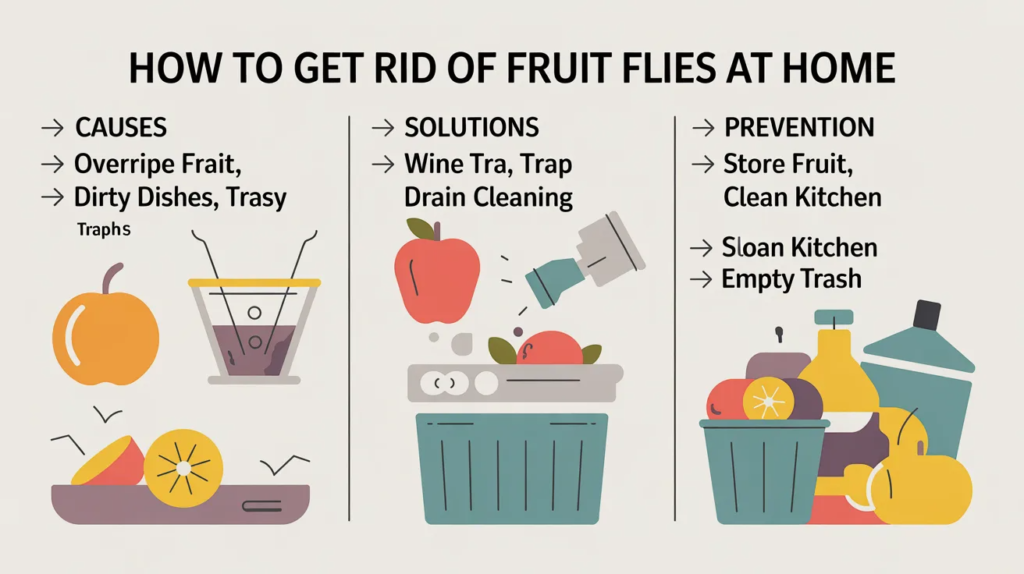
Understanding the root cause is the first step toward solving the problem. Fruit flies are typically drawn to:
- Overripe or rotting fruits and vegetables left on countertops
- Unwashed dishes sitting in the sink with food residue
- Moist drain areas where organic matter accumulates
- Open or unsealed trash bins containing food waste
- Spilled juice, alcohol, or sugary drinks that have not been cleaned properly
- Damp mops, sponges, and dish cloths that retain moisture and organic debris
Identifying and eliminating these sources is essential before any treatment method will work effectively.
Method 1: Apple Cider Vinegar Trap
This is one of the oldest and most effective home remedies for fruit flies, and it works remarkably well.
What you need:
- A small glass or jar
- Apple cider vinegar
- A few drops of dish soap
- Plastic wrap and a rubber band
How to do it:
Pour about an inch of apple cider vinegar into the jar. Add two to three drops of liquid dish soap, which breaks the surface tension of the liquid. Cover the jar tightly with plastic wrap and secure it with a rubber band. Poke several small holes in the plastic wrap using a toothpick.
Fruit flies are strongly attracted to the fermented smell of apple cider vinegar. They enter through the holes but cannot escape because the dish soap causes them to sink. Place this trap near the affected area and replace it every two to three days.
Method 2: Red Wine Trap
If you have an unfinished bottle of red wine sitting around, do not throw it away just yet. Fruit flies are equally attracted to the fermented scent of wine.
Simply leave the bottle with a small amount of wine remaining near the fruit fly hotspot. The narrow neck of the bottle acts as a natural trap. Flies enter easily but struggle to find their way back out. You can also add a drop of dish soap to speed up the process.
Method 3: Clean Your Drains
Many homeowners focus entirely on countertops and fruit bowls while completely ignoring their drains, which are one of the most overlooked breeding grounds for fruit flies.
Organic matter including food particles, grease, and residue builds up inside kitchen and bathroom drains over time. Fruit flies lay their eggs in this moist environment, creating a hidden infestation that keeps regenerating no matter how many traps you set.
To treat your drains:
Pour boiling water down the drain twice a week to flush out buildup. Follow this with a mixture of baking soda and white vinegar, which creates a fizzing reaction that breaks down organic residue. For persistent infestations, use a drain gel cleaner specifically designed to eliminate organic buildup inside pipes.
Method 4: Dish Soap and Water Spray
For fruit flies you can see hovering in the air, a simple spray bottle filled with warm water and a few drops of dish soap works as an effective contact killer.
The soap coats the wings of the fly upon contact, preventing it from flying and causing it to fall. Spray directly at clusters of fruit flies near windows, countertops, or trash areas for immediate results.
Method 5: Store-Bought Fruit Fly Traps
If home remedies are not providing fast enough results, commercially available fruit fly traps are an affordable and convenient option. These products use specially formulated attractants that lure fruit flies into a non-escape chamber.
They are discreet, non-toxic, and safe to use around children and pets. Place them near trash bins, fruit bowls, or sink areas for best results.
Prevention: How to Stop Fruit Flies From Returning
Eliminating fruit flies is only half the battle. Keeping them away permanently requires consistent preventive habits.
Store fruits properly: Refrigerate ripe fruits rather than leaving them on countertops, especially during summer months when temperatures accelerate ripening and fermentation.
Empty trash bins daily: Never allow food waste to sit in open bins overnight. Use bins with tight-fitting lids and clean them regularly with a disinfectant.
Wash produce immediately: As soon as you bring fruits and vegetables home, rinse them thoroughly under running water to remove any eggs or residue on the surface.
Keep sink areas dry: Wipe down sinks, countertops, and surrounding areas after use. Avoid leaving wet sponges or dish cloths on the counter for extended periods.
Clean up spills immediately: Any sugary liquid, juice, or alcohol spilled on counters or floors should be wiped up immediately before it attracts flies.
Seal entry points: Check window screens and door gaps for any openings through which fruit flies might enter from outside.
When to Call a Professional
In most cases, the methods described above are more than sufficient to eliminate fruit flies from your home. However, if your infestation persists for more than two to three weeks despite consistent effort, it may indicate a deeper underlying issue such as a hidden moisture problem, a plumbing leak, or a significant buildup of organic material inside your walls or flooring.
In such situations, consulting a licensed pest control professional is the smartest and most efficient course of action. A professional can identify the exact source of the infestation and apply targeted treatments that are not available through standard household methods.
Final Thoughts
Fruit flies are annoying, but they are not unbeatable. The key to getting rid of them permanently lies in combining active removal methods with consistent preventive habits. Traps alone will reduce the population, but as long as breeding sources remain, new flies will keep appearing.
Start by eliminating every possible attractant in your kitchen and surrounding areas. Set up one or two traps to capture existing flies. Clean your drains regularly and maintain a dry, clean kitchen environment daily.
With patience and the right approach, your home can be completely fruit fly free within a week — and with good habits in place, they are unlikely to return.